Fishing
- Licenses & Regulations
- ShareLunkers
- Fish Identification
- Fish Consumption
- Texas Freshwater Fisheries Center
Water Resources
- Texas Reservoir Levels
- US Army Corps of Engineers
- Texas Water Issues
- Golden Alga
- Aquatic Vegetation
900 CR 218
Brookeland, Texas 75931
(409) 698-9114
Todd Driscoll, Biologist
Local Information
- Convention & Visitors
Bureau
200 East Main
Nacogdoches, Texas 75961
Toll Free: (888) OLDEST-TOWN
Nearby State Parks
Nacogdoches Lake
Quick Links: Fishing Regulations | Angling Opportunities | Cover & Structure | Tips & Tactics
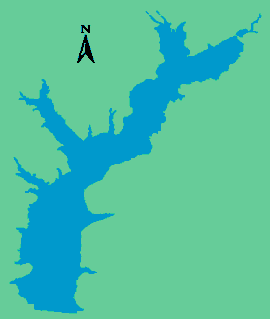
Lake Characteristics
Location: On Loco Bayou, 10 miles west
of Nacogdoches off FM 225
Surface area: 2,212 acres
Maximum depth: 40 feet
Impounded: 1976
Water Conditions
Current
Lake Level
Conservation Pool Elevation: 279 ft. msl
Fluctuation: 1-3 feet
Normal Clarity: Moderately clear
Reservoir Controlling Authority
City of Nacogdoches
PO Box 630648
Nacogdoches, Texas 75963-0648
(936) 559-2960
Aquatic Vegetation
Primarily hydrilla and American lotus
Predominant Fish Species
Lake Records
Stocking History
Latest Survey Report
Lake Maps
None available
Fishing Regulations
This reservoir has special regulations on some fishes. See bag and size limits for this lake.
Angling Opportunities
The most popular game fish at Nacogdoches Lake is the largemouth bass. Numbers of bass are relatively high and an excellent fishery exists. Due to the 16-inch maximum length limit, Nacogdoches is known for producing trophy-sized bass and has produced three fish exceeding 13 pounds. Crappie and catfish are present in the reservoir, but numbers are relatively low and few anglers target these species. Bluegill and redear sunfish are present in high numbers and provide good fishing, especially for youth or inexperienced anglers.
| Species | Poor | Fair | Good | Excellent |
|---|---|---|---|---|
| Largemouth Bass |  |
|||
| Catfish |  |
|||
| Crappie |  |
|||
| Sunfish |  |
Fishing Cover/Structure
Habitat in Nacogdoches Lake consists of aquatic vegetation (mainly hydrilla and American lotus) and boat docks. Largemouth bass are typically found around vegetation edges, points, and creek channels.
Fish habitat structures have been used to create artificial habitat in this reservoir. They were placed by TPWD in cooperation with Nacogdoches County and the Reservoir Fish Habitat Partnership.
Use the Habitat Structure Viewer for an interactive map of fish habitat structures and downloadable GPS coordinates.
Tips & Tactics
Anglers are most successful at catching largemouth bass during the fall, winter, and spring months. Due to cooler water temperatures, fish are active for longer periods of the day and are typically found in shallow water. A variety of baits and techniques will work during these times. When fish are active, crankbaits and spinnerbaits worked over the vegetation will catch bass. During the hot summer, the bite usually slows and fish activity is usually concentrated during early morning, late evening, and at night. Topwater baits are good choices during low light conditions. As the sun rises, most bass are concentrated in or around vegetation edges, or seek refuge on deep creek channel ledges. During this time, plastic worms, jigs, and Carolina rigs are the preferred baits. Sunfish, especially bluegill and redear sunfish, can be caught year-round but fishing peaks during the late spring or summer when fish are on their spawning beds. Small jigs, spinners, and crickets all catch sunfish.